

SMMEs for Taxpayers Issue 14 - April 2026
Budget 2026 impact on SMMEs
Employer Filing Season
Voluntary Disclosure Programme (VDP)
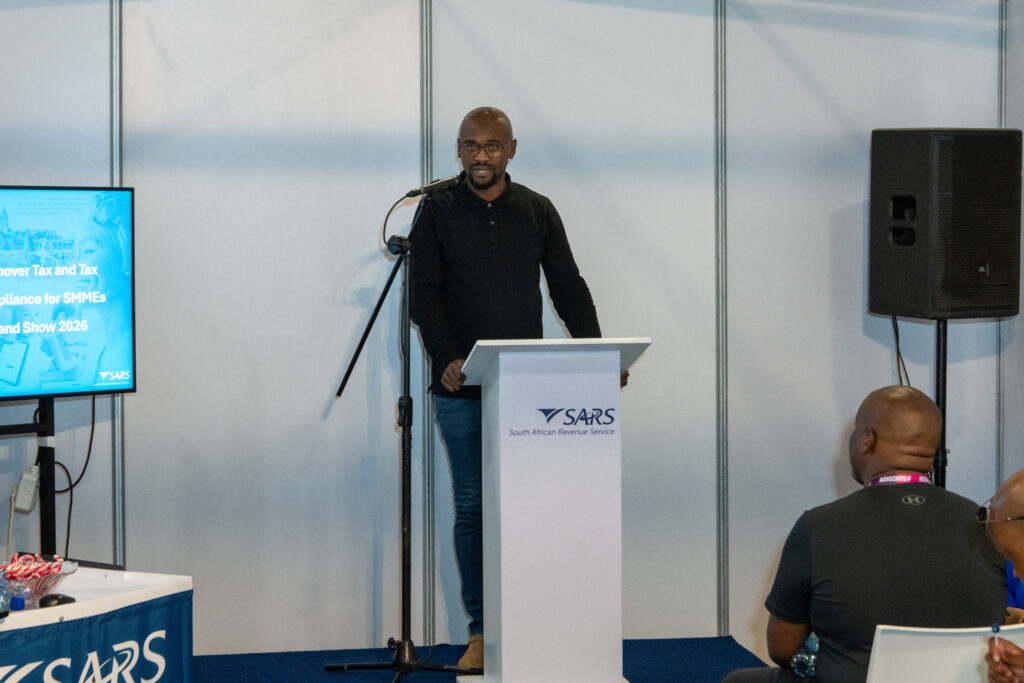
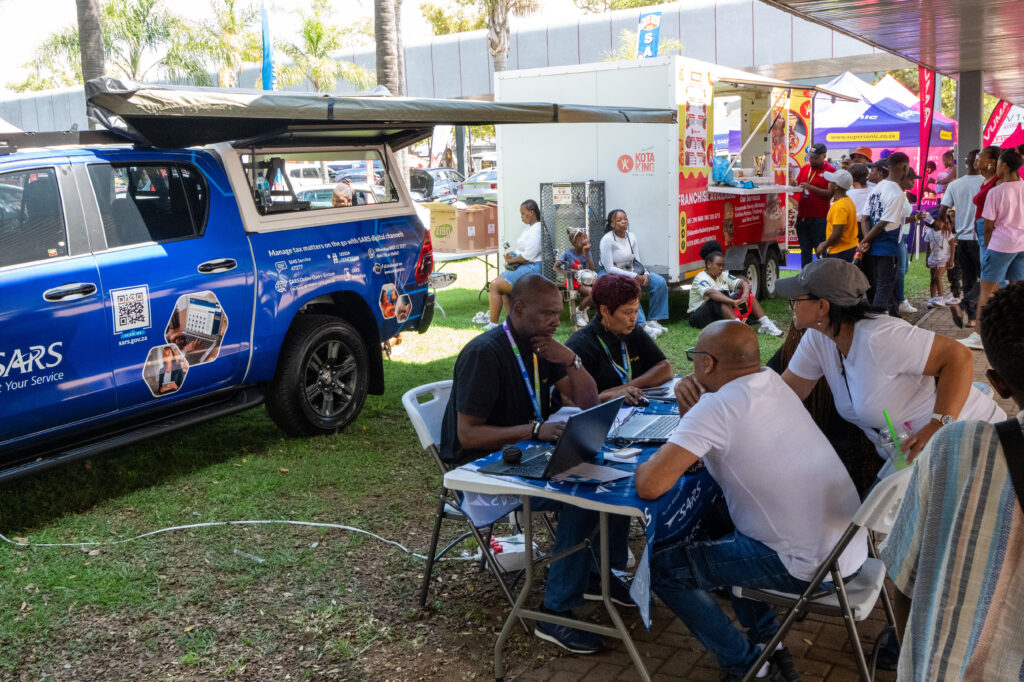
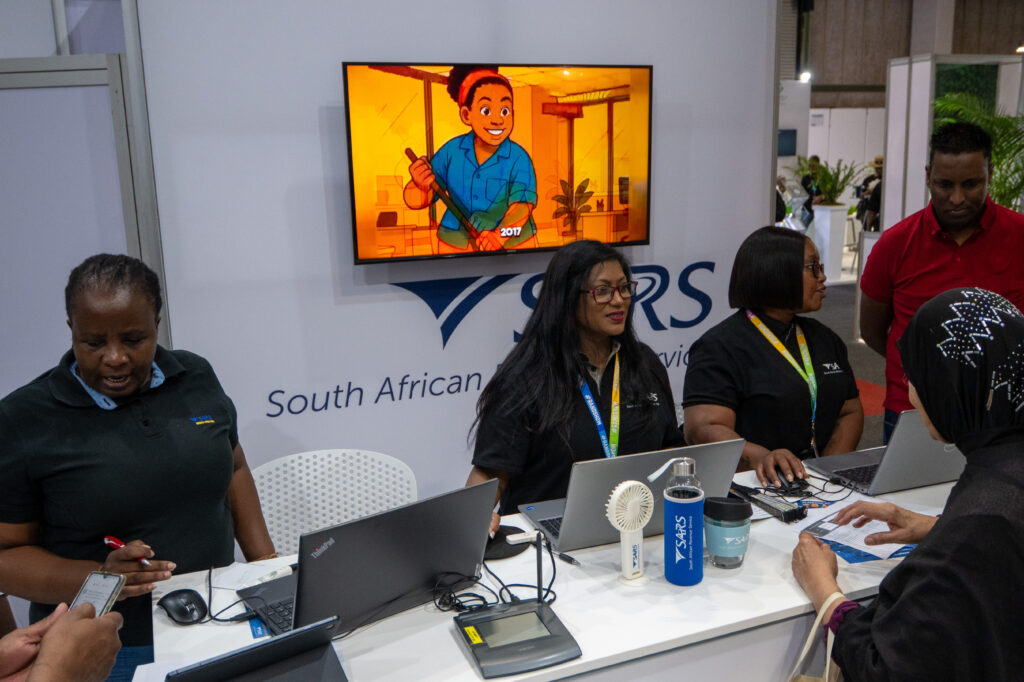
In support of Strategic Objective 1: Providing Clarity and Certainty SARS intensified its SMME education and outreach efforts through active participation in key enterprise development and community platforms. These engagements focused on delivering clear, consistent and practical guidance on tax obligations, registration and compliance across township, tourism, manufacturing and local business sectors. SARS continues to reinforce certainty in the tax system, support business formalisation, and empower SMMEs to make informed decisions that drive sustainable and compliant growth, through direct engagement, compliance education and access to digital self‑help tools. The list is not exhaustive but just to name a few collaborations:
- Proudly South African Buy Local Summit & Expo 2026
- SACCI – Absa–SACCI Township Economy and Development Conference
- Township Entrepreneurs Alliance (TEA) – Kasi Business Workshop (Zamdela, Sasolburg)
- Department of Employment and Labour (Gauteng) – Labour Activation Programme (LAP) Launch & “Taking Services to the People” Initiative
- Department of Tourism & Ekurhuleni Municipality – Compliance and Resilience Workshop (Tourism Sector)
- Rand Easter Show 2026 where SARS show cased their digital channels, education and one on one services which included updating of registered representatives, changing of details, checking overall compliance as well as submitting outstanding returns.
Providing clarity and certainty for Small, Medium and Micro Enterprises (SMMEs) remains SARS’s core priority. In this context, Budget 2026 introduces meaningful tax relief and simplification measures that strengthen the SMME operating environment and support sustainable, inclusive growth. Key reforms include lower and progressive income tax rates for Small Business Corporations, increased VAT and turnover tax thresholds, and a significantly enhanced Capital Gains Tax exemption for qualifying small business disposals allowing entrepreneurs to retain more value as they grow, transition, or exit their businesses.
While some measures are not SMME‑specific, the full inflation adjustment of personal income tax brackets, with no new income tax increases, provides direct relief to SMME owners, sole proprietors, partners and directors. These changes also indirectly support small businesses by improving disposable income and stimulating consumer demand. Importantly, this support is delivered through tax system improvements rather than increased government spending, while reducing administrative burden and introducing no new taxes for SMMEs.
Budget 2026 impact on SMMEs
| Area | Pre-2026 | Budget 2026 |
| VAT Registration Threshold | R1 million | R2.3 million |
| Turnover Tax Ceiling | R1 million | R2.3 million |
| CGT Exemption (Small Business Disposal) | R1.8 million | R2.7 million |
| Administrative Burden | High | Reduced |
| New SMME Taxes | – | None introduced |
Key Budget Speech Highlights Changes Affecting SMMEs
One of the most significant changes in the Budget 2026 pronouncement is the increase in key tax thresholds, particularly for Turnover Tax and VAT. These adjustments ease the compliance burden for smaller businesses and reduce administrative costs, allowing entrepreneurs to focus on operating and scaling their businesses. These changes are a direct response to SARS 2025-30 core outcome 1 which aims to improve voluntary compliance by simplifying laws, policies, and procedures. The Turnover Tax changes are effective the year of assessment beginning 1 March 2026 for Individuals and 1 April 2026 for Companies while VAT is effective 1 April 2026.
Is your Business making less than R2.3 million sales a year?
Great news for small businesses! In the latest Budget speech, Turnover Tax was expanded to include businesses with sales of up to R2.3 million (up from R1 million) opening the door for many more SMMEs to qualify. Even better, the first R600 000 of turnover is now tax free, meaning you pay 0% tax on that portion. Turnover Tax keeps things simple, with rates capped at 3% the maximum tax on R2.3 million turnover will be R39 500 per year, replacing Income Tax, Provisional Tax, Capital Gains Tax and Dividends Tax with just one simple return.
If your business earns R2.3 million or less, now is the time to check if you qualify and switch to a simpler, more predictable way of paying tax. If you are interested please follow this link to register and/or sars.gov.za and the small business page to learn more about Turnover Tax.
The registration process is now easier since its digital transformation: SOQS
SARS has integrated Turnover Tax registration into the SARS Online Query System (SOQS) from November 2025. SOQS enables quick, secure, and fully digital registration — eliminating the need for branch visits or email submissions. SARS employees benefit from reduced operational pressure and consistent processing. The platform is accessible to businesses everywhere, regardless of location.
Micro and smaller businesses
| Item | Before 2026 | Budget 2026 | Direction |
| Turnover tax threshold | R1 million | R2.3 million | 🡹 |
| Tax‑free portion | Lower | Adjusted upward (R600 000) | 🡹 |
| Turnover Range | Tax rate |
| R 0 – R 600 000 | 0% |
| R 600 001 – R 950 000 | 1% |
| R 950 001 – R1 400 000 | 2% |
| R1 400 001 – R2 300 000 | 3% |
VAT Registration Threshold – Comparison
The pronouncement signifies that fewer small businesses will be subject to VAT, resulting in reduced compliance and administrative expenses, as well as enhanced cash flow.
| Item | Before 2026 | Budget 2026 | Direction |
| Compulsory VAT registration | R1 million | R2.3 million | 🡹 |
| Voluntary VAT registration | R50 000 | R120 000) | 🡹 |
For more information, go to: Budget
Employer Filing Season
Employees’ Tax Compliance Starts with You, the Employer
The Employer Annual Declaration period opens on 1 April 2026 and closes on 31 May 2026. During this period, employers are required by law to submit their annual reconciliation declarations (EMP501) containing accurate, complete, and up‑to‑date employee payroll and tax information. Employer data is a primary input into:
- Employee tax assessments
- Auto Assessments and
- Pre‑populated Income Tax Returns (ITR12).
What is new
Mandatory Income Tax Reference Numbers
Valid Income Tax Reference Numbers are mandatory for employer submissions. Employers must verify employee details early and register employees before submitting. Missing or invalid Income Tax Reference Numbers will prevent certificates from being captured or result in incomplete submissions, leading to delays and non‑compliance.
Technical Clinics (New Support Intervention)
SARS is introducing technical clinics as an early readiness intervention. The clinics are practical sessions that help employers and relevant third-party data providers prevent common errors before submission, reduce rework, and improve data quality.
Social Media Live Q&A Sessions (New Support Intervention)
SARS will also host social media live Q&A sessions as an additional support platform during the Employer Filing Season. These sessions allow for real-time engagement, where common questions are answered and give guidance for accurate submissions.
SARS offers simple EMP501 submission options based on your business size.
- 50 or fewer employees: Submit via SARS eFiling or e@syFile™ Employer (payroll files can be imported).
- More than 50 employees: e@syFile™ Employer is mandatory.
- 5 or fewer IRP5/IT3(a) certificates: Visit a SARS Service Centre for assisted submission.
SARS is committed to making compliance easier for micro and small businesses.
For more information, read: The updated PAYE Employer Reconciliation 2026/2027 and The Step by Step guide

Easyfile Employer version 8.0.1_337
The e@syFile™ Employer version 8.0.1_337 release notes specify the following changes:
- Enhancement made to Bulk Payment function to include bulk payments for ITA88’s.
See more detail in the release notes.
Voluntary Disclosure Programme (VDP)
VDP gives relief to taxpayers who have tax defaults with SARS and would like to avoid penalties and possible criminal prosecution. This is a safe and confidential way to come clean about past tax mistakes without judgment. It is about making things right and the programme is open to anyone who qualifies. If taxpayers come forward voluntarily, they can avoid penalties and get a fresh start. The relief is limited to defaults disclosed, and for which relief is granted per the VDP agreement. Here are the benefits:
- SARS will not pursue criminal prosecution for a tax offence arising from the default.
- Relief for understatement penalties to the extent referred to in column 5 or 6 of the understatement-penalty percentage table in terms of section 223 of the Tax Administration Act.
- 100% relief for an administrative non-compliance penalty that was or may be imposed under Chapter 15 of the Act, or a penalty imposed under a tax Act, but excluding penalty for the late submission of a return.
A taxpayer’s VDP application and disclosure must:
- Be made voluntarily.
- Involve a default which has not occurred within five years of the disclosure of a similar “default” by the applicant or a person referred to in section 226(3) of the Act.
- Be full and complete in all material aspects.
- Involve a behaviour referred to in column 2 of the understatement-penalty percentage table in section 223 of the Act.
- Not result in a refund due by SARS.
- Be made in the prescribed form and manner.
- Be submitted before the taxpayer is notified of an audit or criminal investigation by SARS.
For more information, go to: Voluntary Disclosure Programme (VDP)