
SMME Connect Issue 16 (October 2026)

Issue 16 - October 2026

In this edition of SMME Connect, we share the story of how SARS brings tax education closer to small businesses through partnership and community engagement. By collaborating with government SMME champions and spotlighting the transport industry during Transport month, SARS is helping entrepreneurs gain the knowledge, support, and confidence they need to grow, meet their tax obligations, and contribute to South Africa’s economy. This edition also makes it easier to take the next step by highlighting key employer filing updates, available support channels and Turnover Tax a simplified, consolidated tax option for small businesses.

  • How Conversations with Cross-Border Transport Businesses Are Turning Compliance Questions into Practical Support
  • What Your Business Should Know
  • Support Channels and Safety Guidelines
  • Creating content? Connect with your tax obligations
  • Registration for Turnover Tax on the SARS Online Query System (SOQS)
How Conversations with Cross-Border Transport Businesses Are Turning Compliance Questions into Practical Support

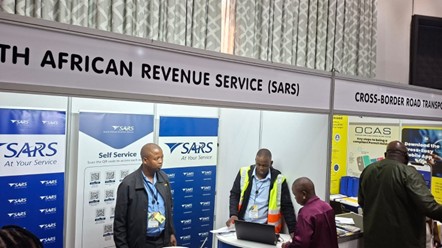
SARS officials engage delegates at the exhibition stand during the CBRTA 2nd Annual MSME Conference.

The Question behind the Counter

Transport Months offers an opportunity to turn awareness into action. Discover how recent engagements are helping transport business understand what is required, access practical support, and take manageable steps towards compliance and growth. At a busy exhibition stand in KwaZulu-Natal, one business owner asked a question many growing businesses may face: “How do I grow across borders and stay compliant at the same time?” With the right information and clear steps, compliance can become part of the journey to growth, rather than a barrier to it.

It is a question many emerging transport operators carry with them. While managing operating costs, they must also, understand several regulatory requirements, gain market exposure, secure finance, and build sustainable operations. For these businesses, compliance is part of the path to wider market access.

That is why the Cross-Border Road Transport Agency (CBRTA) 2nd Annual MSME Conference mattered. It brought together government, industry, finance, and emerging transport businesses to explore how transformation commitments can become real opportunities. The SMME Segment used the opportunity to listen to operators’ needs, identify the barriers affecting compliance and growth, and connect businesses with clear, relevant tax, customs, and trader-compliance support.

Listening First, Then Responding
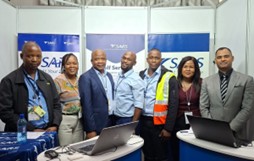
At the SARS stand, delegates could move from broad conference discussions to dealing with the practical questions affecting their businesses.

At the SARS stand, delegates could move from broad conference discussions to dealing with the practical questions affecting their businesses.

Engagements with SARS helped the SMME segment better understanding   the uncertainties that can delay formalisation and limit access to opportunity. Participants in the CB-RTA incubation programme expressed a clear need for focused SARS compliance support to help them understand and meet their compliance obligations.

Compliance That Helps Trade Move

SARS’ Authorised Economic Operator (AEO) programme representative presented a session titled “SARS Customs and Tax Compliance Essentials for MSMEs in Cross-Border Road Transport”. The session covered customs compliance, trade facilitation, cross-border processes, and the AEO value proposition for compliant operators and traders.

The central idea was that legitimate trade should move through a framework that is secure, predictable, and compliant. As the presentation connected technical requirements with daily business realities, emerging operators could see compliance as an enabler of trusted trade.

For more information, go to: FATCA and CRS and Customs and Excise.

What Your Business Should Know

The conference conversation continues beyond the venue. Keep the momentum going with these practical compliance reminders to help your business stay on track and move forward with confidence.

PAYE: The Seven-Day Rule Matters

Employers who must withhold employees’ tax are required to register for PAYE; deduct the correct amount using the prescribed tax tables; and pay it to SARS within seven days after month-end. If the seventh day falls on a weekend or public holiday, payment is due on the last business day before such weekend or public holiday. Late payment may attract penalties and interest. We are in the employer filing season, which resumed on 23 September and will end on the 31 October 2026.

Changes to note:

  • See the e@syFile Release Notes here.
  • The update from version 8.0.1 to 8.0.2 requires a full uninstall and reinstall from the eFiling website.
  • New button added to the PAYE Dashboard that links to the e@syFile Technical FAQs.
  • New Income Tax registration (ITReg) indicator added to Employee Admin for additional information to be captured.
  • New button added on the Reconciliation page that allows users to log a “Pending Submission” query directly from the application.
  • New option added to the Reconciliation Status Dashboard Action tab to allow users to generate a tax certificate cancellation declaration (EMP601).
  • New tab System Info added to Utilities menu.

For more information, see the e@syFile FAQs.

To Stay Compliant, Note These Important Dates (October to December)

October 2026

  • 7 October 2026: Submit and pay EMP201 (PAYE, UIF, and SDL) for September 2026
  • 23 October 2026: Individual Filing Season closes for non-provisional taxpayers. Sole proprietors must submit their ITR12 returns by this date.
  • 31 October 2026: EMP501 Interim Reconciliation due for employers.

November 2026

  • 7 November 2026: Submit and pay EMP201 for October payrolls.
  • 25 November 2026: VAT201 submission and payment (where applicable).

December 2026

  • 7 December 2026: Submit and pay EMP201 for November payrolls.
  • 31 December 2026: Some companies with a June financial year-end must submit their ITR14 Company Income Tax Return by this date.

The Dates at a Glance

Use this checklist to plan your submissions and payments. Confirm the requirements that apply to your business before acting.

OCTOBER 2026

7 Oct
EMP201 submission and payment for September

23 Oct
Individual Filing Season closes for non-provisional taxpayers

31 Oct
EMP501 Interim Reconciliation due for employers

NOVEMBER 2026

7 Nov
EMP201 submission and payment for October payrolls

25 Nov
VAT201 submission and payment, where applicable

DECEMBER 2026

7 Dec
EMP201 submission and payment for November payrolls

31 Dec
ITR14 may be due for some companies with a June year-end

Link the Correct Registered Representative

A Registered Representative is the person SARS recognises as authorised to manage an organisation’s tax affairs. Without one, a business may struggle to submit returns, activate tax products, update details, or transact effectively. Once the correct representative is linked, tax types can be activated or managed on eFiling; branch assistance can be booked if the online process cannot be completed.

Choose a Trusted Tax Practitioner

A tax practitioner should be registered with a recognised controlling body and authorised to provide tax services. An unregistered practitioner can expose a business to incorrect submissions, penalties, delays, disputes, or fraud. Remember, the taxpayer remains responsible for information submitted to SARS on their behalf.

VAT Modernisation

VAT modernisation forms part of SARS’s Modernisation 3.0 programme (the transition from the traditional digital tax administration toward an intelligent, data-driven and AI-enabled tax, customs and excise administration). The proposed model includes e-invoices, e-credit notes, e-debit notes, an interoperability framework, and e-reporting definitions. The aim is a more secure, structured, and efficient flow of VAT-transaction data. Vendors should follow SARS updates and participate in consultation opportunities where relevant.

For more information, go to: Pay As You Earn and Confirm Tax Practitioner Registration.

Support Channels and Safety Guidelines

Be Aware of Scams: Protect Your Business from Digital Risks

Be alert to fake emails or SMSs claiming that you owe SARS money or asking for payment through suspicious links. SARS will never ask for passwords, one-time PINs, banking PINs, or eFiling login credentials through email, SMS, social media, or telephone.

Protect yourself:

  • Verify SARS communication through official SARS platforms.
  • Do not click links in suspicious emails or attachments, especially .html files.
  • Do not share personal, banking, or login details.
  • Use your banking app’s official SARS payment option when making payments.
  • Regularly review the latest scam alerts on the SARS website: Scams & Phishing.

SARS Digital Channels: Compliance Support at Your Fingertips

Main digital platforms:

  • eFiling (sarsefiling.co.za)
  • SARS MobiApp
  • SARS Online Query System (SOQS)

Interactive digital channels:

  • WhatsApp: chat with SARS by sending “Hi” to 0800 11 7277.
  • USSD (no internet required): dial *134*7277# on your phone.
  • SMS services: Dial 47277.

SARS’s Lwazi AI Assistant is available on the SARS website to answer common taxpayer questions. (It should pop up in the bottom-right corner of your screen.)

For more information, go to: SARS Mobile Tax Services.

Creating content? Connect with your tax obligations

Are you a social media influencer or content creator? SARS’s dedicated guide and webpage are now live, helping you better understand your tax obligations. These resources bring tax education closer to the changing ways people earn income, making tax information easier to understand and supporting voluntary compliance. Explore the guide and webpage to learn more.

For more information, go to: Social Media Influencers and Content Creators.

Registration for Turnover Tax on the SARS Online Query System (SOQS)

Before we conclude, is your business’s annual turnover less than R2.3 million? If so, Turnover Tax is a simplified tax system for qualifying small businesses which replaces Income Tax, VAT, Provisional Tax, Capital Gains Tax, and Dividends Tax. For more information, you can watch this video: How to Register for Turnover Tax SOQS. Alternatively, visit the SARS Turnover Tax webpage.

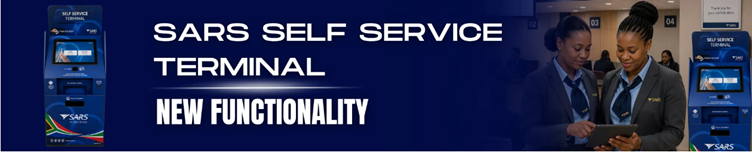
SARS is also extending the Turnover Tax registration process to Self-Service Kiosks at selected SARS service centres and shopping malls. This will enable qualifying micro and small businesses to access the same guided registration service at convenient locations, particularly where they require digital access or assistance. Taxpayers should check the availability of this service at their nearest SARS service centre or participating shopping mall.
For more information, go to: How to register for Turnover tax.

Small Businesses Taxpayers

Find a Tax rate

Use our Digital Channels

Taxpayer and Trader Education

Contact Us 

Report Suspicious Activity