
SMMEs for Taxpayers Issue 15 for August 2026
Turning compliance into confidence for small businesses.
In this 15th edition of SMME Connect, SARS reinforces its commitment to make tax compliance simpler and more accessible for small businesses through education and collaboration.
This edition tells the story of SARS meeting SMMEs where they are: in learning spaces, industry platforms and community engagements. It highlights recent taxpayer education initiatives, including International SMME Day 2026, the Manufacturing Indaba and SEZ workshops, where SARS engaged entrepreneurs, manufacturers and SMMEs on tax obligations, digital services, record keeping, Turnover Tax, Tax Compliance Status and voluntary compliance.
Through these engagements, SARS continues to bring tax administration services closer to taxpayers, support business formalisation and empower SMMEs with the knowledge needed to trade, grow and remain compliant. Every engagement is an opportunity to turn information into action and compliance into a business advantage.
- Provisional Tax obligations and upcoming deadlines.
- The enhanced Turnover Tax regime and qualifying criteria.
- Maintaining a valid Tax Compliance Status (TCS).
- Record-keeping requirements for SMMEs.
- Deregistration processes.
- Protecting your business against scams and fraud.
- SARS digital services to make compliance easier.
Outreach and Education Engagements

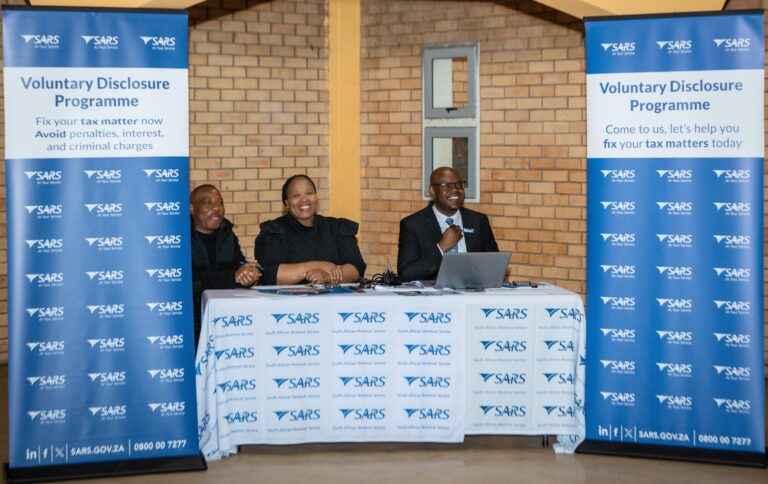
International SMME Day campaign in Komani (Queenstown), delivered primarily in isiXhosa to promote accessibility, inclusivity and meaningful engagement among attendees.

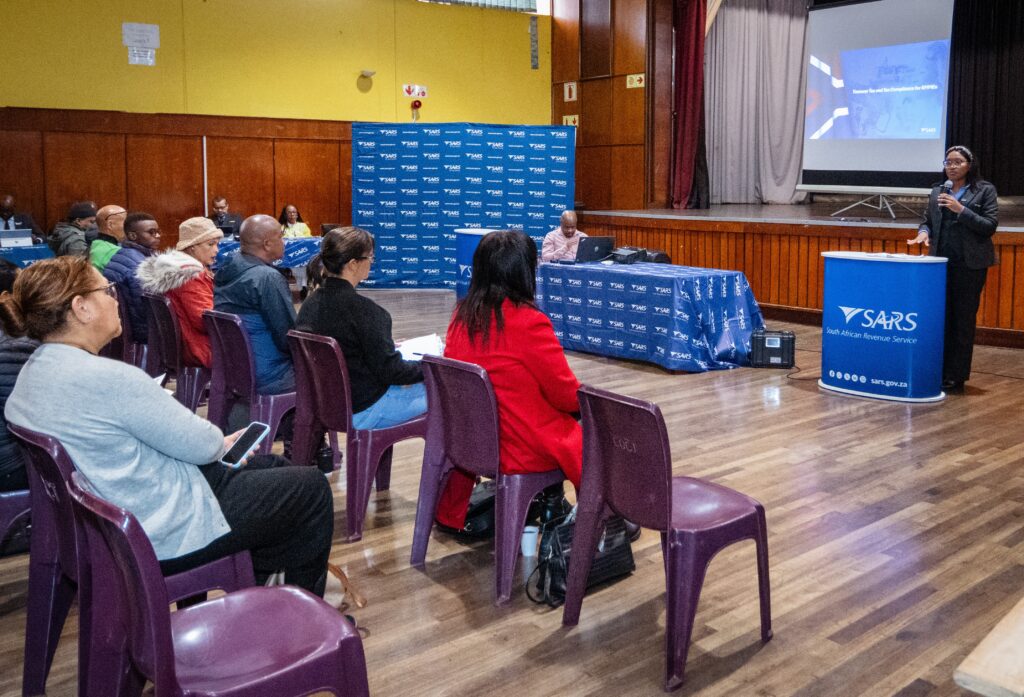
Cape Town: SARS officials provide taxpayer education and on-site support to SMMEs, with partner stakeholders collaborating to strengthen awareness of tax obligations, service channels and business development opportunities.
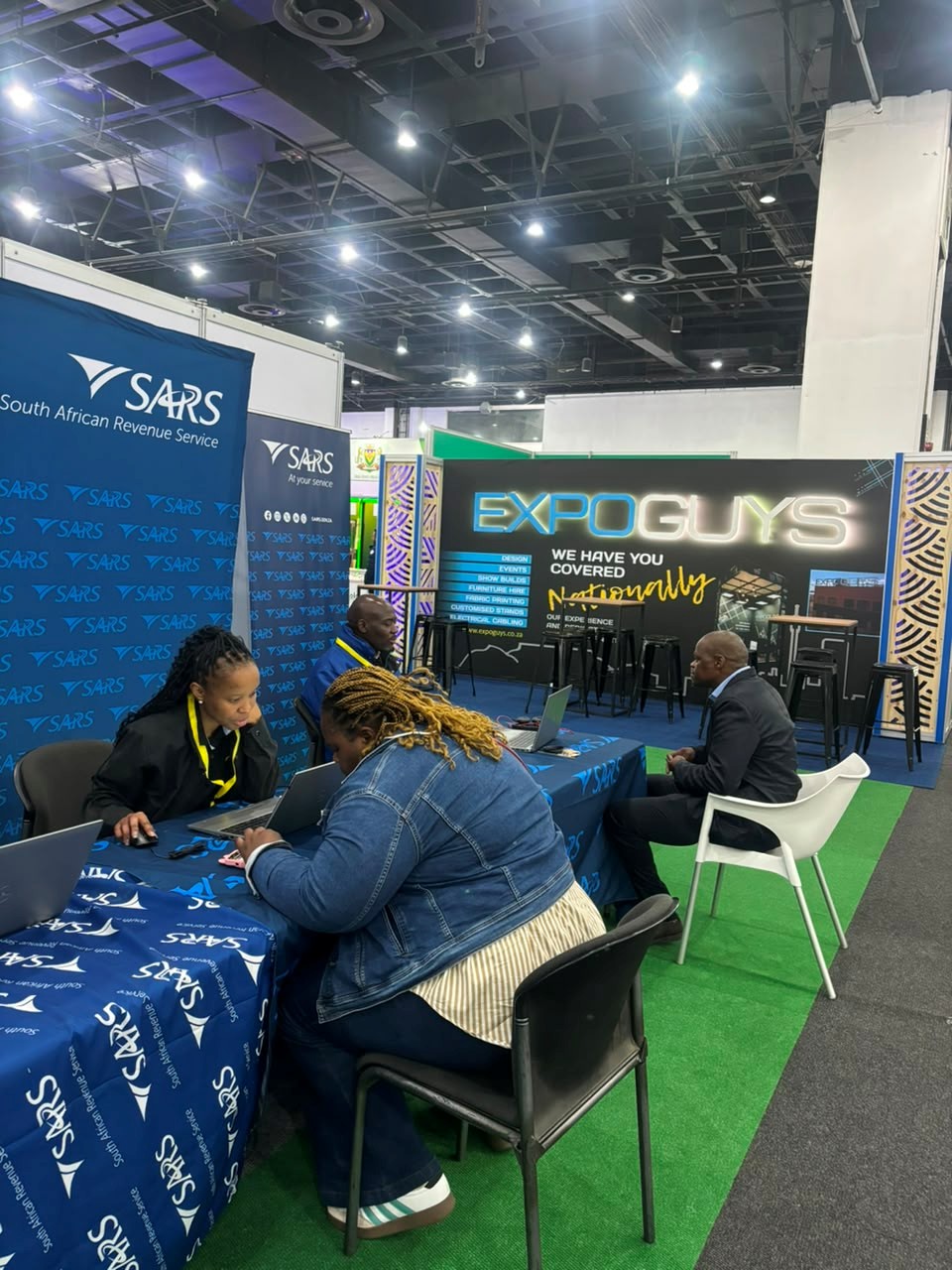

SARS engaged manufacturers, exporters, SMMEs and value-chain participants on tax and customs obligations, digital services, trade facilitation and voluntary compliance on the Manufacturing Indaba at Sandton Convention Centre in July.
Provisional Tax: Planning Ahead, Paying with Confidence
What Is Provisional Tax?
Provisional Tax is part of Income Tax and allows taxpayers to pay tax in advance on income not subject to PAYE, based on estimated taxable income. Payments are credited against the final tax due after assessment.
Who Should Pay Provisional Tax?
Individuals and entities that receive income not subject to PAYE must submit a Provisional Tax return (IRP6) and pay through SARS eFiling.
Provisional Tax Obligations and Deadlines
There are two compulsory payment periods and one optional third payment. Submit and pay by the last business day of:
- First period: 31 August
- Second period: 28 February
- Third period (optional): 30 September
In any other case, pay within six months of the end of the year of assessment.
- Submission Channels for IRP6
What You Need to Know
Provisional taxpayers must calculate and estimate taxable income accurately, based on expected profits. For more information on how to work out the amounts due, click here.
- Make payments in August and February.
- Make a third-period payment by 30 September, where necessary.
- Estimate taxable income accurately to avoid underestimation penalties.
- Late or inaccurate submissions may incur penalties.
For more information, visit Provisional Tax.
Turnover Tax: A Simplified Route for Qualifying Small Businesses
What is Turnover Tax and How Does It Benefit SMMEs?
Turnover Tax is a simplified tax system for qualifying small businesses. It reduces compliance costs, offers lower rates, and replaces Income Tax, VAT, Provisional Tax, Capital Gains Tax, and Dividends Tax for qualifying entities. Registered micro-businesses can remain in the VAT system if they prefer.
The Turnover Tax threshold increased from R1 million to R2.3 million, and the tax-free threshold increased from R500 000 to R600 000, effective 1 April 2026.
Who Qualifies for Turnover Tax?
- Micro-businesses with an annual turnover of R2.3 million or less.
- Sole proprietors, partnerships, close corporations, co-operatives, or companies.
- Partners involved in only one partnership.
- Businesses that are not personal-service providers or labour brokers.
Take a quick test to check if you qualify for Turnover Tax
Registering for Turnover Tax
Businesses must register before the start of the year of assessment, which begins on 1 March, or within two months from the date when business activities began.
- If you qualify, submit your registration on the SARS Online Query System (SOQS).
- Or fill in a TT01 application form and submit via SARS branch by booking an appointment.
Declaration and Payment of Turnover Tax
Turnover Tax returns (TT03) must be submitted annually between 1 July and 31 January of the following year. Turnover Tax has three payment periods:
- 1st payment: last business day of August, using the TT02 – Payment Advice for Turnover Tax.
- 2nd payment: last business day of February, using the TT02.
- Final payment: after the annual TT03 has been submitted and processed.
Turnover Tax returns may be submitted through:
- A SARS Taxpayer Service Centre: Make an appointment on our eBooking system; or
- email SARS at [email protected]
Records to Keep and Responsibilities to Note
Keep records of:
- All amounts received.
- Dividends declared.
- Each asset with a cost price of more than R10000 at the end of the year of assessment, as well as liabilities exceeding R10 000 (you can record these as a list).
Your responsibilities are to:
- Check if your business qualifies for Turnover Tax, based on the applicable thresholds.
- Submit required returns on time.
- Keep proper records of all income.
For more information, go to: Turnover Tax
Tax Compliance Status: Opening Doors to Growth Opportunities
Why It Matters
A valid Tax Compliance Status (TCS) helps SMMEs access contracts, funding, and business opportunities by showing good standing with SARS. Accurate records, timely submissions, and updated information lets your business avoid delays, audits, and disputes.
A TCS PIN allows authorised third parties to view your compliance status online without sharing personal details.
How to Stay Compliant
- Always keep your tax affairs up to date.
- Submit all outstanding returns (even for dormant companies).
- Pay any outstanding debt.
- If your business is no longer operating, consider deregistration.
Note: Dormant companies must fulfil their tax obligations even if they are not trading, unless they are formally deregistered.
TCS Application Channels
You can request your Tax Compliance Status on:
- The SARS Online Query Service
- Online via eFiling
How to Get Your TCS on eFiling
- A TCS PIN is issued electronically once the taxpayer is compliant. The PIN can be used by authorised third parties to verify the taxpayer’s current compliance status.
How to Get a Good TCS
You are compliant when:
- All tax returns are submitted.
- There is no outstanding debt.
- Supporting documents are up to date.
For more information, go to: How to Access My Compliance Profile and How to request your Tax Compliance Status.
Record Keeping: Building a Reliable Business Trail
Record-Keeping Requirements
All taxpayers, including individuals, businesses, and traders, must keep financial, transactional, and operational records.
- Records must be retained for at least five years from the date of submission of a tax return/declaration.
- In cases of an audit or investigation, records must be preserved until the matter is resolved, even if it exceeds the five-year period.
For more information, go to: Record keeping
Deregistration: Closing Tax Obligations the Right Way
When Should You Deregister?
Taxpayers should deregister for tax when they stop trading; emigrate; or meet the relevant legal criteria, e.g. are below the tax threshold for VAT. Inactive companies should formally deregister the applicable tax types with SARS.
Why Should You Deregister?
Deregistration releases the entity from future tax obligations once all outstanding requirements are met. It also prevents unnecessary administration and penalties for non-submission.
Company Deregistration
The SARS deregistration process can begin only once the company or close corporation has been deregistered with the Companies and Intellectual Property Commission (CIPC).
- Submit the CIPC deregistration certificate to SARS via email ([email protected]); through a tax practitioner ([email protected]); or at a SARS Taxpayer Service Centre by appointment.
Individual Deregistration
Submit a letter to SARS if the individual has emigrated, become a non-resident, or no longer has income and assets.
Remember: All outstanding returns and debt must be resolved before deregistration can be finalised.
Channels for Deregistration
- eFiling (sarsefiling.co.za)
- SARS branch office (appointment only)
- [email protected]
- [email protected] (only for tax practitioners)
For more information, go to: Closing a Business or Company
Saturday Service Centre Support: Making Filing More Accessible
As the Individual Filing Season deadline of 23 October 2026 approaches, SARS is extending support beyond the normal working week by opening selected service centres on Saturdays. This gives taxpayers, including small business owners with busy weekday schedules, an additional opportunity to get assistance, submit outstanding Income Tax returns and stay on track with their compliance responsibilities. For more information click here.
Keep Your Contact Details Updated: Stay Reachable, Stay Informed
Keep your personal, contact, and banking details updated so that you receive SARS notifications on time and to support the efficient processing of any refund due. You can update your details online using the SARS MobiApp or eFiling.
How to Confirm Your Contact Details on eFiling
Follow these steps to complete the process:
- Log into eFiling.
- Select “My Profile” from the left menu.
- Proceed to the “Profile and Preference Setup” tab.
- Update or confirm your contact details for SARS’s records.
For more information, go to: Maintain personal details on eFiling vs Branch.
Be Aware of Scams: Protect Your Business from Digital Risks
How to Protect Yourself
Be alert to fake emails or SMSs claiming that you owe SARS money or asking for payment through suspicious links. SARS will never ask for passwords, one-time PINs, banking PINs, or eFiling login credentials through email, SMS, social media, or telephone.
Protect yourself:
- Verify SARS communication through official SARS platforms.
- Do not click links in suspicious emails or attachments, especially .html or .html files.
- Do not share personal, banking, or login details.
- Use your banking app’s official SARS payment option when making payments.
List of latest scams: Scams & Phishing
NB: report suspicious phishing messages to [email protected].
SARS Digital Channels: Compliance Support at Your Fingertips
Main Digital Platforms
Interactive Digital Channels
- WhatsApp: chat with SARS by sending “Hi” to 0800 11 7277.
- USSD (no internet required): dial *134*7277# on your phone.
- Use 47277 for SARS SMS services.
- SARS AI Assistant is available on the SARS website to answer common taxpayer questions. (It should pop up in the bottom-right corner of your screen).
Closing Message: Turn Knowledge into Action
✔ Keep records up to date.
✔ Submit returns on time.
✔ Stay informed and compliant.
✔ Ask for help when needed.
“Compliance is not just about following rules — it is about giving your business the confidence to grow, compete, and thrive.”
For more information, visit the SARS SMME webpage.
#YourTaxMatters